10 Shocking Pregnancy Stories
List of Pregnancy Stories:
The longest pregnancy ever registered was 1 year and 10 days
- The shortest successful pregnancy ever recorded
- The youngest mum ever is reported to be a five-year-old girl
- The smallest surviving baby ever born weighed just 8.6 oz and was only 10 inches long
- The biggest successful pregnancy ever is from octuplets
- Identical quadruplets do exist
- A woman got pregnant from twins frozen 30 years ago
- The oldest recorded woman to have a baby was 66 years old
- Conjoined twins have a short live but some get to adults
- Even Though being rare, some babies are born with their heart outside
Sometimes we believe that all pregnancies are alike and that all women go through the same experience. The reality cannot be further from this. Each woman and each pregnancy are different and here are some of the shocking pregnancy stories in history.
1. The longest pregnancy ever registered was 1 year and 10 days
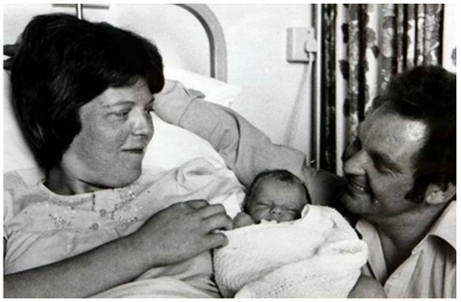
Yes, as crazy as it sounds. Baby Penny was overdue by more than 100 days, and her mother’s 375-day pregnancy was the longest one ever recorded in human history.
Beulah was pregnant for a year and ten days, when a healthy pregnancy typically lasts 40 weeks (280 days). For the first three months of Beulah’s pregnancy, everything went according to plan, but at six months, the physicians noticed some changes. According to the reports, she had just begun to feel her baby moving.
Despite the delayed development, the 25-year-old’s birth went completely to plan.
Since the story received harsh criticism, the child’s doctor, Daniel Beltz, was compelled to publicly publish his patient’s pregnancy test to the media.
Many believed that Beulah’s first pregnancy must have ended in miscarriage and she became pregnant again so rapidly without realizing it. Yet Dr. Beltz showed a lab test from March 24 that demonstrated the woman’s menstrual cycle had ended on February 10.
Besides Beulah, a Chinese woman, Want Shi is also known for her long pregnancy. However, contrary to Beulah who could demonstrate it, medical professionals have questioned a Want’s claim. She claimed that she was pregnant for 17 months in 2016 but she declined to provide an ultrasound as evidence.
Wang Shi said she fell pregnant in February 2015, was due in November, but delayed giving delivery until August after learning she had placenta previa, a disease marked by an undeveloped placenta that would cause labor to be prolonged.
Attempts were made to contact the woman’s doctors, and one physician named Huang told QQ “The baby is around 38 weeks old, according to my checkup. The situation looks typical.” Dr. Huang indicated that it was hard to tell from the pregnancy, but Wang lacked the essential documentation to support her claims that the pregnancy had been going on for as long as she claimed.
2. The shortest successful pregnancy ever recorded
It’s difficult to understand how little these tiny babies may be if you’ve never seen an extremely preterm baby. The absolute youngest age of survival for preemies is thought to be between 22 and 24 weeks gestation. The average birth weight of these preemies is slightly more than a pound. Amazingly, though, the smallest surviving preterm newborns barely weigh half as much, or roughly 7.5 ounces.
For these babies to survive, they require access to many medical resources. Even having the best medical care, the rate of survival is low. They face high odds of having some level of disability or developmental impairment, such as cerebral palsy, visual impairment, hearing impairment, or cognitive delays.
On May 20, 1987, James Elgin Gill was born in Ottawa, Ontario, around 128 days early or at a gestation of 21 weeks. As the most preterm infant ever born, he set a record when he was born. James was predicted to either die at birth or, if he survived, suffer several and significant disabilities. Jimmy overcame all odds and became a healthy adult.
However, the Guinness record for world’s most premature baby Richard Hutchinson is found. He was born on June 5, 2020, when his mother, Beth Hutchinson, was just 21 weeks and two days pregnant. Even Though he was born two days after James Elgin, he has the Guinness record since the medical records of James are not as clear as the ones from Richard.
Richard Hutchinson weighed 11.9 ounces and fit into one hand. The mother was due date in October 2020 and still doesn’t know why her baby was born early since her pregnancy was fairly normal without major issues.
3. The youngest mum ever is reported to be a five-year-old girl
Lina Marcela Medina de Jurado (Spanish pronunciation: [ˈlina meˈðina]; born 23 September 1933) is a Peruvian woman who became the youngest confirmed mother in history when she gave birth on 14 May 1939, aged five years, seven months, and 21 days.
Parents in a remote Peruvian community noticed their 5-year-old daughter’s swollen belly in the early spring of 1939. Tiburelo Medina and Victoria Losea drove their young daughter to see a doctor in Lima out of concern that the swelling might be a tumor.
The doctor unexpectedly found that Lina Medina was seven months pregnant. A healthy son was born to Medina through C-section on May 14, 1939. She became a mother for the first time at the age of 5 years, 7 months, and 21 days.

Medina’s case took pediatricians by surprise and drew international attention that she and her family never desired.
Despite the ongoing mystery surrounding the case of the youngest mother in the world, it’s believed that Medina had a rare genetic condition called precocious puberty, which causes a child’s body to change into that of an adult too soon (before age eight for girls and before age nine for boys). This, together with the sexual abuses of her fathers, might had been the cause of her early pregnancy.
4. The smallest surviving baby ever born weighed just 8.6 oz and was only 10 inches long
Rumaisa, whose name means “white as milk,” was delivered at the hospital on Sept. 19 together with her fraternal twin sister, Hiba, who weighed 1 pound 4 ounces. Hiba’s name means “gift from God.”
After 25 weeks and 6 days of pregnancy, their mother, Mahajabeen Shaik, 23, of Hanover Park, gave birth via Cesarean section. Pregnancy at full term typically lasts for 40 weeks. Shaik was admitted to the hospital early because she had severe pre-eclampsia, or high blood pressure, which was having an impact on both her health and Rumaisa’s development inside the womb.
The kids were in incubators with IVs attached, so Shaik and her husband Mohammed Abdul Rahman, 32, who are both from Hyderabad, India, couldn’t hug their daughters until the second month. The infants are the couple’s first children and were born naturally, according to hospital officials.
Dr. Jonathan Muraskas, professor of pediatrics and neonatal-perinatal medicine at Loyola University Chicago’s Stritch School of Medicine, indicated that all signs pointed to an outstanding prognosis for a normal development.
5. The biggest successful pregnancy ever is from octuplets
The Suleman octuplets were born to Nadya Suleman on January 26, 2009, in Bellflower, California, and consist of six male and two female offspring who were created using in vitro fertilization (IVF). They are the first known octuplets to survive infancy, and they currently reside in Lancaster, California. Due to the very contentious circumstances surrounding their high-order multiple birth, there have been discussions about assisted reproductive technology and a Medical Board of California investigation against the case’s fertility expert.
Dr. Michael Kamrava used in vitro fertilization (IVF) to create Suleman’s octuplets. Suleman stated that despite being told that the recommended guideline maximum for a lady her age was three, she sought transfer of six embryos that she had amassed through prior IVF procedures.

She claimed she did not want to destroy the six because they were the only ones left over from earlier harvest cycles, nor did she want to keep paying for their frozen storage. Instead, she wanted all transferred. Despite the fact that 29 embryos were still in frozen storage after a Medical Board of California inquiry, Suleman had a fresh embryo transfer cycle, and at her request, Dr. Kamrava implanted 12 fresh blastocysts into Suleman. From the mother’s first trimester, the condition of the pregnancy and her health were monitored.
At the Kaiser Permanente Bellflower Medical Offices in Bellflower, California, two practice deliveries (by scheduled Cesarean section) involved 46 medical staff. The babies were carried by Suleman for 31 weeks. The eighth baby was unexpected because the doctors had only expected to deliver seven. All eight infants, who were delivered over the course of five minutes, were immediately reported to be in stable health, but two needed intubation and a ventilator, and another needed additional oxygen.

6. Identical quadruplets do exist
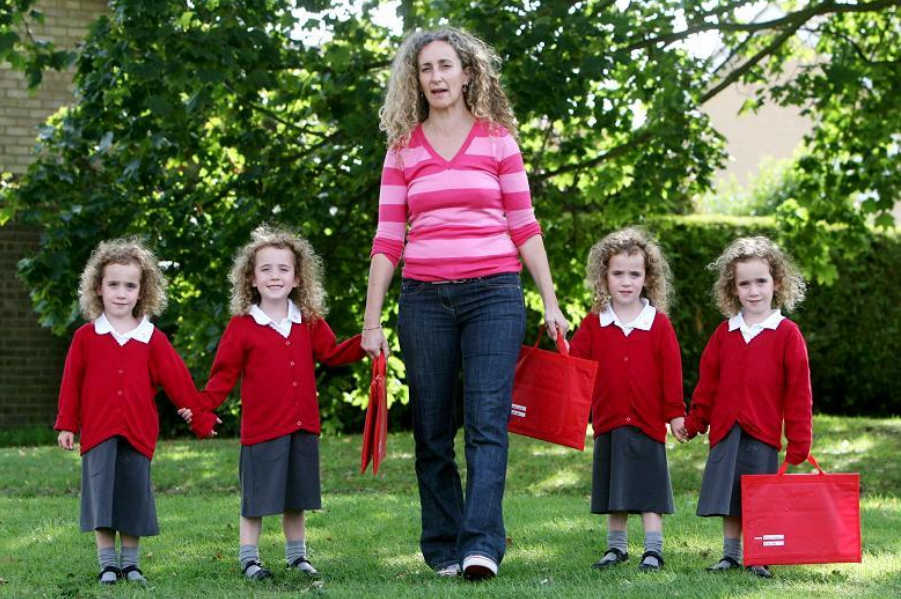
Identical quadruplets Preana, Audreana, Natalie, and Melody Khamsa were delivered just minutes after midnight on March 27, 2002, in California to couple Ornsee Khamsa and Verek Muy. The girls are genetically identical, originating from a single egg fertilized by a single sperm, doctors said.
Even the proudest parents who boast about their child being one in a million can’t compare to Ornsee Khamsa and Verek Muy. Really one in 11 million, their four girls were born early on Monday in Sacramento. This is how uncommon identical quadruplets are.
Quadruplets as well as twins can happen for several reasons as we learned on the “how are twins made” post. Most of the cases it is unknown but the most common thing to happen is for the embryo to break early in the development giving rise to more than one baby from one egg and one spermatozoa.
Preana, Audreana, Natalie, and Melody Khamsa are healthy girls that, as seen in the photo, still look alike.
7. A woman got pregnant from twins frozen 30 years ago
In April 1992 Rachel and Philip Ridgeway’s newborn children were born as usual, the thing that is not usual about them is that they were frozen as embryos for 30 years before being implanted in her birth mother’s belly.
According to the National Embryo Donation Center, Lydia and Timothy Ridgeway were born on October 31 from what may be the longest-frozen embryos to ever result in a live delivery.
Molly Gibson, who was born in 2020 from an embryo that had been frozen for over 27 years, held the previous record. Molly stole the record from her sister Emma, who was created from a 24-year-old frozen embryo.
Although the US Centers for Disease Control and Prevention maintain success rates and data regarding reproductive technology, they do not document how long embryos have been frozen, thus it’s possible that an older frozen embryo was used. Yet, there is no proof that a live birth from an older embryo has ever occurred.
In-vitro fertilization was used to produce the embryos for a married couple who shall remain nameless. They used a 34-year-old egg donor, and the spouse was in his early 50s.
On April 22, 1992, the embryos were frozen. They were preserved for nearly three decades on microscopic straws in liquid nitrogen at a temperature of almost 200 degrees below zero, in a container resembling a propane tank.
The embryos were stored at a West Coast fertility lab until 2007, when the couple who developed them decided to donate them to the National Embryo Donation Center in Knoxville, Tennessee, in the hopes that another couple might be able to use them. According to Dr. John Gordon, the Ridgeways’ physician, the five embryos were transported to Knoxville overnight in specially designed tanks.
Philip Ridgeway remarked that they weren’t seeking to get the embryos that have been frozen the longest in the world. They merely desired those who had waited the longest.
The Ridgeways specifically inquired about a category known as “special consideration” when looking for donors, indicating that it had been challenging to locate recipients for these embryos, for whatever reason.

8. The oldest recorded woman to have a baby was 66 years old
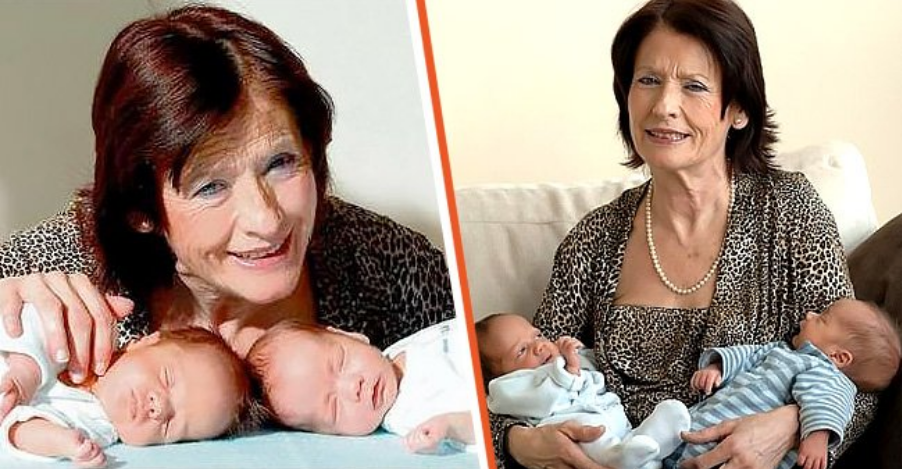
The oldest mother is Maria del Carmen Bousada Lara (Spain, b. 5 January 1940), who gave birth by cesarean section to twin boys, Christian and Pau, when she was 66 years old at the Sant Pau hospital, Barcelona, Spain on 29 December 2006.
Maria received IVF treatment in America (by lying that her age was 55 years), after being rejected for treatment in Spain. She is unmarried.
Unfortunately, only 3 years after giving birth, in 2009 she passed away after being diagnosed with cancer.
Critics of late motherhood characterized Carmen’s decision to have children as “selfish, unnatural and wrong, her children are innocent victims of her pernicious plan for reproductive self-gratification.” Her own siblings publicly criticized her decision. She vehemently defended her decision. At the time of the birth he declared that “Everyone has to have children at the right time for them. This was the right time for me. It was something I always dreamed of.” In an interview in 2006, he stated that his mother had reached the age of 101 and that therefore she expected a good opportunity to raise her children and even to see her grandchildren.
Pau and Christian, the two children of the oldest mother in the world, went to live with one of their cousins in El Puerto de Santa María, after his mother’s death.
The person who became the legal guardian of Pau and Christian is the son of Ricardo Bousada, brother of the deceased. Carmen, during an interview on television, already stated at the time that she did not feel worried about what would happen to her children when she died because they both had very young godparents. And so it has been, his godfather was the person who took custody of the two little ones.
9. Conjoined twins have a short live but some get to adults
It is very rare for conjoined twins to be born, it is believed to occur in one in every 200,000 births, and 40-60% of them are stillborn. Sisters are more likely to survive than boys. Any operation to separate them requires a very complex and dangerous process.
American conjoined twins Brittany Lee Hensel and Abigail Loraine Hensel were born on March 7, 1990. They are remarkably symmetrical for conjoined twins, providing the appearance of having a single body without significantly deviating from standard dimensions. They are dicephalic parapagus twins (having two heads attached to one torso).
Each has a spinal cord, heart, stomach, pair of lungs, and spine. Twins share control of one arm and one leg. When they were little, they had to work together to learn how to crawl, walk, and clap. They can both eat and write at the same time. Coordination is needed for tasks like jogging, swimming, brushing your hair, playing the piano or volleyball, riding a bike, or operating a motor vehicle.

10. Even Though being rare, some babies are born with their heart outside
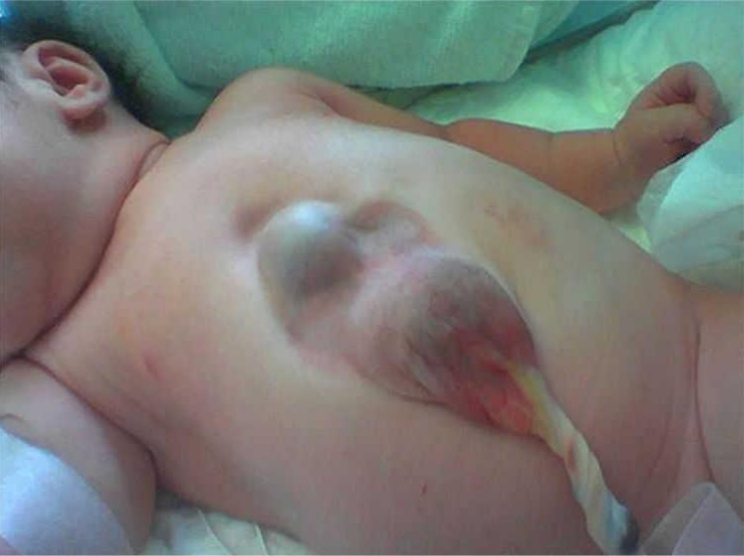
This is the case of Christopher Wall who came into this world with all the right parts, except that one of them was in the wrong place. His heart was beating outside his body. This was more than a medical rarity. It was a mystery.
Medical professionals thought the infant wouldn’t live even one day. Ectopia cordis, an incredibly rare heart disease, caused Christopher to be born with his heart protruding from his chest. According to his doctors, Ectopia cordis is a disorder so uncommon that just 5 to 8 kids out of every million born would have it. Many infants with this illness pass away within the first 16 days of life, and some do not even make it through labor. Scientists are still unable to pinpoint why some infants suffer from the condition while others do not.
When Christopher was born, Dr. Victoria Vetter, a pediatric cardiologist at the Children’s Hospital of Philadelphia, who was on staff, stated that a number of these conditions are caused by genetic and inherited causes but that they still do not know exactly why some children may carry a particular gene and others don’t.
Wall was informed right away that Christopher may not survive because the baby was born with a severe case of the disease. The neonatal critical care unit at the hospital received her baby son right away. Without the modern, improved medical techniques, Christopher’s situation would have been a “total surprise”.
Women, unlike now, did not receive sonograms or ultrasounds throughout pregnancy, and ultrasound technology was still in its infancy, especially when it came to the heart, according to Vetter. Therefore, until the time of Christopher’s birth, the medical professionals were unaware of this issue. It came as a complete shock.
Christopher had no space within his body for the little organ because it formed outside of his chest cavity. This rendered it difficult to put Christopher’s heart back into his body due to the stress that surgery would put on the heart’s blood veins. The infant stunned his physicians by living through his first few days and then his first few weeks, though.
In 1978, two days before his third birthday, Christopher was able to leave the hospital and go home for the first time. Christopher was able to live life like a normal kid, riding his first bike and playing sports such as karate and basketball. Teresa Wall made a point of letting her son take risks. If you want to expand on the topic visit Pubmed.
Explore other Topics


Hot topics!
The best books for pregnancy, reading only one booked we have seen that the confidence of the mother in herself and the process is highly increased. Whether you’re looking for practical advice, emotional support, or simply an enjoyable read to help you relax, this list has got you covered. So grab a cup of tea, curl up on the couch, and explore the best pregnancy books of 2023.


Both moms and newborns can benefit from breastfeeding in terms of health. A newborn receives the best nourishment from breast milk, which also promotes growth and development. Breastfeeding can also help protect baby and mom against certain illnesses and diseases.


The Best Pregnancy Products of 2023: Your Essential Guide
The Top 10 Breastfeeding Supplies Every New Mom Should Have
The best method to receive the vitamins and minerals you need is through a balanced diet. Nonetheless, it’s possible to lack important nutrients when pregnant. Prenatal vitamins can help fill up any gaps if you are pregnant or trying to get pregnant.