Here are the 10 Most Common Myths about Pregnancy 2023.
Have you ever heard that morning sex can hurt the baby? Well that is a lie.
Myth 1. Pregnant women have to eat for two.
This is maybe the most commonly accepted myth about pregnancy. But no, pregnant women do not have to eat more, and much less for two. Although pregnancy increases the body’s need for calories and nutrition, the amounts of calories or specific nutrients you need are not doubled.

Assuming that you started your pregnancy with a normal weight, about 300 calories per day are needed above your normal intake during the second and third trimesters of pregnancy.
However, each woman and each pregnancy is different so you should never trust any diet that comes out on the internet, it is better to trust a nutritionist.
This is just the first of 10 most common myths about pregnancy 2023 that we have compiled, these are a must read to not be fooled.
Myth 2. It’s okay to drink a glass of wine when you’re pregnant.
It is commonly thought that if you only drink “ a little bit” of alcohol it’s not going to be a problem at all. But this cannot be more far from reality. Experts are still unsure exactly how much – if any – alcohol is completely safe for you to have while you’re pregnant, so the safest approach is not to drink at all while you’re expecting.
Babies get the nutrients from the umbilical cord that connects the placenta to the baby. The placenta is like a web where only little molecules can get through. Unfortunately, alcohol is small enough to pass through. So, when you drink, alcohol passes from your blood through the placenta to your baby. A baby’s liver is one of the last organs to develop and doesn’t mature until the latest stages of pregnancy. As you probably know, the liver is the one in charge of detoxifying your blood, and since babies do not have a functional liver, alcohol stays in their blood affecting their development.
- It is important to know that drinking alcohol during pregnancy increases the risk of miscarriage, premature birth and your baby having a low birth weight. it can also affect your baby after they’re born.
Myth 3.Your belly reveals the baby’s gender.
From the minute you share your pregnancy, you begin to hear all sorts of comments, many of them predicting the future sex of the little one.
One of the more widespread misconceptions about pregnancy and gender prediction is belly shape. If your tummy is low, you could have heard that you’re carrying a boy. You’re allegedly carrying a female if it’s high.
According to the misconception, males are carried lower in the uterus because they are more autonomous. Females are hoisted up higher because they reportedly require extra protection.
This tale contains more absurd elements than just these gender stereotypes. Even worse, depending on who you listen to recount this tale, you may have heard it told backwards!
However, the truth is that there are a huge variety of variables that affect how you carry your pregnancy, including your belly’s size and shape. none of which reveal the gender of your unborn child.
Myth 4. You can’t exercise while pregnant.
When you get the news that you are pregnant, a lot of fears appear from nowhere. You don’t want to harm the baby so you think that doing less and less things may be the best. Haven’t we all heard that doing exercise while pregnant is dangerous?
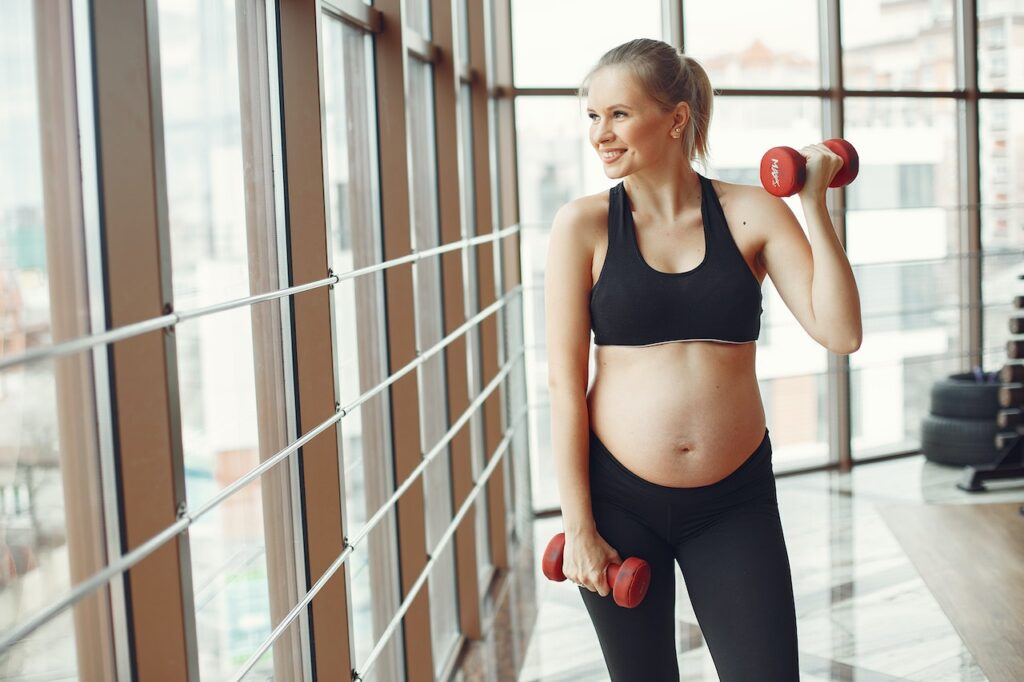
Nothing more far from reality. Exercise is beneficial for your physical and emotional well-being as well as the health of your future baby. Obviously, there are cases where complete rest is required and the best recommendation we could give you is to ask your doctor about your case.
It has been scientifically proven that maintaining your exercise regimen if you were an active person before becoming pregnant and are used to it. Simply stay away from new, demanding exercises like holding your breath, overly bouncing or stretching, leaping, bouncing, and rapid jerk actions, advanced abdominal moves, and heated surroundings like hot yoga.
Myth 5. Morning sickness is just a morning thing.
The same might seem very clear, but it is actually not. Even though we all have seen in movies that pregnant women wake up in the morning nauseous, this is not limited to the morning at all.
Despite some women may not even experience nausea or vomiting at all, it is true that a good amount of future mothers do. Some of them will experience this nauseous all day, or more commonly after or before eating.
Myth 6. Pregnant sex can hurt the baby.
Unless your doctor or midwife has advised against it, having sex while pregnant is completely safe.
Having sex won’t harm your unborn child. Your vagina cannot be penetrated by a penis or other penetrating sex object, and the baby cannot sense what is happening.
Your sex desire changing during pregnancy is nonetheless common. Despite the fact that this is nothing to be concerned about, discussing it with your partner might be beneficial.

You could like having sex while you’re pregnant or you might just feel like you don’t want to. There are different methods to show affection or engage in intimate relations. The most crucial step is discussing your feelings with your partner.
Sex and orgasms won’t raise your chance of early labor or result in a miscarriage if your pregnancy is uncomplicated and normal. Mild contractions can be triggered by an orgasm or even sex itself later in pregnancy. You will feel the muscles in your womb contract sharply if this occurs. Although they might be unpleasant, Braxton Hicks contractions are completely natural and shouldn’t cause anxiety. Perhaps you should attempt some relaxation methods or just lay still till the contractions stop.
However, you may be wondering “which are the best positions to have sex during pregnancy?”. Obviously as the bomb grows there will be some positions that are going to be impossible. It could be preferable to sleep on your sides with your partner behind you or facing each other. You could also want to experiment with being on top while having sex or from behind while squatting.
One of the easiest ways to have an orgasm during pregnancy is through oral sex, not only because you don’t have to move at all but also because your clitoris will be more sensitive. Anycase, make yourself comfy by using pillows, enjoy and do not worry.
Myth 7. Heartburns means that the baby has lots of hair.
This is probably one of the most commonly believed of all and it is not for no reason. In 2006 a research published in the journal Birth did discover a link between a woman’s level of heartburn during pregnancy and how much hair her infant had. However, this does not establish a true connection between heartburns and baby hair for many reasons.
On the one hand, only 64 women were included in the little trial. In addition, the majority of the data gathered was anecdotal. As the women self-reported their heartburn severity, it’s probable that each lady had her own idea of what “severe” or “moderate” meant.

It’s unlikely that baby hair on its own causes heartburn. Progesterone is more likely to be the problem. During pregnancy, progesterone is a hormone that relaxes the valve between your stomach and esophagus, which is the tube that transports food and liquids from your mouth to your stomach. Heartburn occurs more frequently when the valve is loosened because stomach acid can more easily enter the esophagus and irritate the lining. The link is that progesterone also contributes to a baby’s hair growth.
So actually, it is preferable to concentrate on heartburn prevention rather than finding a baby barber if you get heartburn during pregnancy. Avoid eating things that are greasy, fatty, or spicy, and wait an hour after eating before going to bed.
Myth 8. Bleeding during your first trimester means you are having a miscarriage.
Although any bleeding at any point in the pregnancy can be frightful and terrifying, it is not always indicative of a miscarriage. In reality, 20% to 40% of women experience vaginal bleeding throughout the first trimester. If you do have any bleeding while pregnant, it’s still crucial to consult your doctor to figure out what’s going on. For more information check this article on Pubmed.
Myth 9. It’s best to wait until after you give birth to get a flu shot or COVID-19 vaccine.
It is actually quite the opposite. Both of these conditions put pregnant women at a higher risk of experiencing severe symptoms, needing hospitalization, or being admitted to the intensive care unit. Also, they are more likely to experience pregnancy difficulties such as preterm birth (before 37 weeks), which can raise the likelihood of impairment or even death.
The COVID-19 and flu vaccines are reliable and secure, and they are not just for moms. While infants are too young to receive vaccinations, there is evidence that if their mother received the shots while she was pregnant, the infants may gain some protection from the diseases.
Major medical organizations like the Centers for Disease Control and Prevention (CDC) advise that vaccinations are safe to receive for the flu and COVID-19 at any time during pregnancy. You do need to be aware of which vaccine you are taking if you are receiving the COVID-19 shot.
Myth 10. You should not drink coffee while pregnant.
When you become pregnant, you don’t have to fully give up your caffeine habit. Although it used to be recommended that pregnant women completely avoid coffee and other kinds of caffeine, experts now think that low to moderate doses are safe as long as you follow a few measures.

According to current recommendations from the American College of Obstetricians and Gynecologists (ACOG) and other specialists, pregnant women can safely drink up to 200 mg of caffeine per day (the equivalent of one 12-ounce cup of coffee).
More than that might somehow raise the risk of miscarriage, although the available data are conflicting.
So, as long as you reduce the caffeine consumption, everything should be okay.