
BABY CRYING SOUNDS
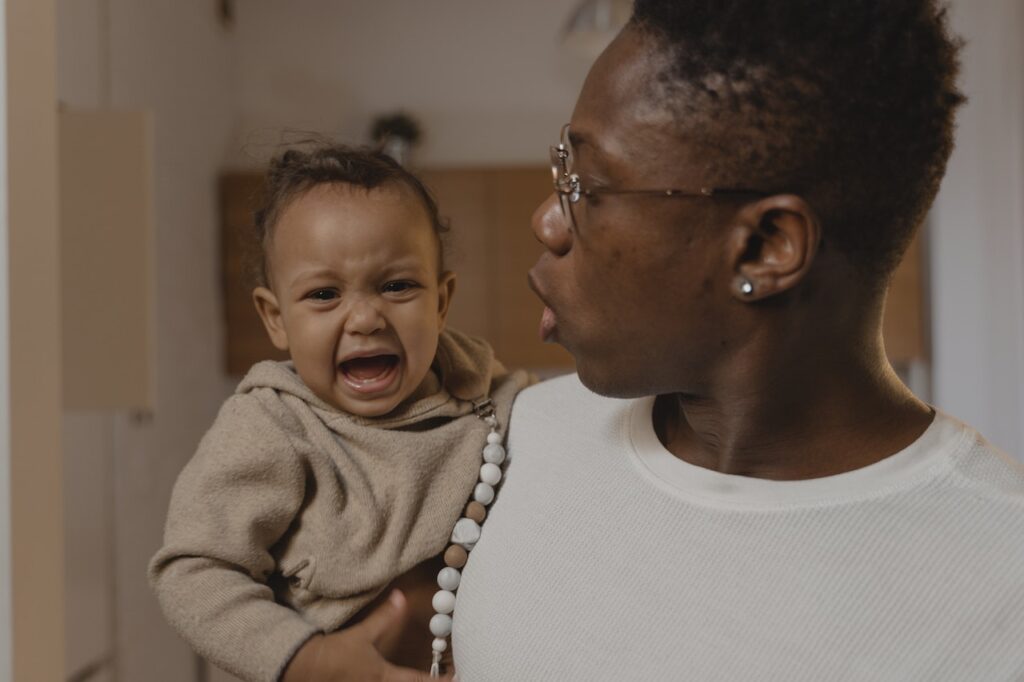
Babies make a variety of sounds, including grunts, gurgles, and baby babbling. Most of the time, they’re happily engrossed in their new world. Nonetheless, they have to let you know when a need occurs, and crying always gets your attention. Understanding the sounds of a baby crying will help you calm them more quickly.
It might be difficult for new families to interpret the meaning of each weeping sound. You’ll be relieved to learn that infants do, in fact, speak their own language, which, surprisingly, is the same regardless of where your child was born. The good news is that you may simply learn this worldwide infant language.

WHY DO BABIES CRY?
Families may experience stress in the first few weeks after the birth of a new child as they try to understand why their infants are screaming. Many wants or emotions can be expressed through a baby’s cries.
During the first several weeks, new parents must take care of themselves. When you are calm and in good health, you have more energy to spend quality time with your child, set a good example for them to follow, and respond to all of their diverse cries.
TOP 8 REASONS WHY YOUR BABY IS CRYING
Lorem ipsum dolor sit amet, consectetur adipiscing elit. Ut elit tellus, luctus nec ullamcorper mattis, pulvinar dapibus leo.
1. Your baby’s diaper is full.
In the early months, babies cry a lot. Although there are many different baby cries, your child will let you know whether their diaper is moist or full if they have one. One of the main causes of newborns’ discomfort is an unclean or moist diaper. Nobody wants to keep their child in a full diaper longer than necessary.
Pay attention: A whiny, nasal, persistent cry that alternates between shorter and longer cry sounds. It is an indication that the baby is done when the noises intensify into wailing. Verify whether their diaper is full or filthy.
- What to do? Try to change their diaper as quickly as possible and leave them with a dry diaper with quite a lot of cream. Usually, after a “diaper full” cry, it comes an “uncomfortable” cry because they do not feel okay in the new diaper, to avoid it moisturizing the area is a good option.
2. Your baby needs to eat.
Both breastfed and bottle-fed newborns exhibit this sort of cry. A newborn may take some time to wake up and realize they are hungry in the beginning. At first, it could seem like fussy crying, but after a time, the cries get louder, longer, and more demanding as they get more furious.
Keep an ear out for a shriek that resembles a siren. Often, the hand is placed to the lips, the fingers are clenched, and the head is turned toward the breast or bottle.
When a newborn is hungry, they make the sound “neh” by sucking. The mouth of your infant is the ideal place to look for this sound. In the womb, they start to practice this vocal reaction. You will first hear the sound “neh” if your infant is sucking while crying.
Similar to how we produce the sound “nnn,” babies generate this noise by moving their tongue to a place behind their teeth. Your baby’s tongue moves forward in a sucking action when their mouth opens. It produces the sound “neh” when combined with the air behind a cry. It could resemble the word “net” in sound.
In addition to this sound, when they are hungry, the majority of newborns tighten their fists (a reflex known as the palmer grasp). Infants could also try to nibble on, suck, or grab for your chest or a bottle while holding out their hand. You can respond to your kid before they become really hungry by watching how they react to hunger.
- What to do? Respond to hunger cues quickly so that the baby doesn’t get too worked up. If she’s upset and begins gulping air with her milk, she may trap gas or spit up, which will probably result in more crying.
3. Your baby is exhausted.
It is hard to learn the schedule your baby needs to sleep well and to have enough energy. At the beginning they are almost always sleeping. Newborns cannot sleep by themselves and they need their mother’s (or father’s) help. This is nothing new, at the end they have spent 9 months sleeping inside your belly and your heart beat is something that makes them relax and feel safe.
To know if your baby is crying because it is asking for your help to sleep, you should look for baby cries that are high pitched and have a lot of breath behind them. They frequently start off as brief, gentle whimpers and become louder when the child’s demands are addressed. Your natural senses will pick up on and memorize this scream.
When they are exhausted, newborns emit the sound of “owh.” The infant makes this noise as it yawns and exhales. Both before and during infant crying, “Owh” can be heard. Infants who make this sound have a flattened tongue, an oval-shaped mouth, and plenty of space inside the mouth.
Your infant could start scratching their eyes if it’s time for a sleep. Their cry may begin low and hushed and progressively increase in volume and power. Your infant may scream out when they are hungry if they are also tired. You can distinguish between the two by listening to the first sound that precedes the cry.
- What to do? Try to calm them down and help them to sleep. Usually using neutral noises such as the sea waves or birds singing helps, this could go well together with some subtle movement. If your baby is too agitated, try the skin to skin technique where your baby is able to hear your heartbeat.
4. Your baby may be sick or feeling unwell.
It can be difficult for new parents and caregivers to hear this cry, but it typically means that your baby is not feeling well. Consider other signs as well, such as your baby’s level of lassitude, the presence of watery eyes, and the presence of a runny or congested nose.
If you are concerned that your kid may have a fever, take their temperature. If you are worried about their health or wellbeing, contact your general practitioner or a state-run hotline. Inform your doctor if you believe your infant has acid reflux (GER).
Keep an eye out for: Persistent sobbing that doesn’t cease even after the baby has been fed, soothed, or put to sleep. Symptomatic cries sometimes resemble weak, exhausted groans. Typically, they have high pitches and little intensity.There may also be long pauses between crying sessions.
- What to do? If your baby has a fever or you suspect that they are ill, the best option is to call or to go to the doctor’s office for them to check. If you already know that they are ill but they cannot stop crying, try to calm them down with skin to skin or by hugging them as much as you can, sometimes they need to know that you are there for them. However, in this case, there is not much you can do.
5. Your baby is uncomfortable.
Whenever, especially with older infants who have greater movement, this kind of scream might be heard. Simply put, your child is not at the place they want to be. They may move around a lot while in your arms, turn their heads from side to side, or reach in the direction they want to go.
A wail that sounds more like a synthesis of all the cries should be heard. The infant may be persistent until they get their way. They could occasionally ask to be put down. Other times they may want to be picked up and held or cuddled by a different person.
Cold, hot, or general discomfort
Infants automatically produce the sound “heh” at times of tension and discomfort, such as when it’s time to change their diaper. It’s a sound that older babies, those older than six weeks, make. This sound is brought on by a skin response, such as an itchy or sweaty sensation. The vocal range of “Heh” is varied.
When a newborn is uncomfortable, their weeping is often brief and moderate. If you ignore the weeping, it will get louder, so make sure to calm your baby down and find the source of their suffering right away.
The typical moderate and sporadic wailing of a newborn in pain. If you ignore the weeping, it will get louder, so make sure to calm your baby down and find the source of their suffering right away.
- What to do? Try to check if your baby is in the correct temperature, the pajamas are soft and everything is in place. Usually there is something that is bothering them and it should be easily spotted.
Burp
If your baby makes the sound “eh,” they need to be burped. Internal reflexes forcing an air bubble from their chest are what are making this noise. A quick hiss, a grunt, or a squeak that sounds like the “eh” in “egg” is the baby’s natural response. The noise your infant produces when trying to burp is not a true burp.
Signs that your baby needs to burp include a distressed look, fidgeting, kicking, shaking, and other fussiness. Air bubbles should not build up, obviously. Even if they haven’t completed drinking, it’s a good idea to burp them immediately and then continue with their meal.
- What to do? Try to pat your baby’s back until the burp comes out. In addition, to try to avoid it if you are using formula, you should always keep the feeding bottle upside down, not allowing any air bubbles to go into your baby’s mouth.
Gas
When a baby is between 6 and 12 weeks old, this sound is more common. You may tell when a baby is agitated or flatulent by the sound response “eairh.” If the sound is distinct from crying, your infant may have some overall discomfort but may not experience severe gas pain.
With an open mouth, a tongue pulled back, and a firm belly, “Eairh” begins. The beginning of the “eairh” sound is prolonged into a loud cry when the pain is severe. Dunstan characterizes it as a loud, strong wail that unnerves parents. It is brought on by tense abdominal muscles.
If you miss the first sounds and your baby starts to cry, the wailing will be rhythmic, loud, and strong. It will persist until the wind, which could move in a manner akin to a bowel movement, has passed. There are various different grips you can use, or you may massage them, to lessen their discomfort.
- What to do? try to rub their tummy in circles pushing down in order to help the gas to escape your baby’s belly. In addition, to try to avoid it if you are using formula, you should always keep the feeding bottle upside down, not allowing any air bubbles to go into your baby’s mouth.
6. Your baby is overstimulated.
Your infant may become overstimulated if there are too many lights, unfamiliar sounds, or activities happening all at once. In this case, the best you can do is to modify their surroundings. To help your infant rest, draw the curtains, turn down the lights, add some white noise—such as from a fan or vacuum cleaner—or play recorded natural sounds.
Baby screams that are loudly rising, dropping, and rising should be heard. This cry resembles those made by babies experiencing wind or gas discomfort. Your youngster could make an effort to move their body or head away from bothersome noises or lights.
- What to do? Try to calm your baby down by hugging them as much as you can and try to put them to sleep. Usually a dark room and some white noise helps.
7. Your baby is bored.
Infants scream to communicate their wants. Babies may be unable to express their needs other than by crying. Yet, boredom might also be a reason for their sobbing.
There are two perspectives on newborn infant screams brought on by boredom:
- Babies that are fussy and restless try to get attention. “I sobbed, and they came!” is an example of how crying attracts attention. This frequently results in someone cradling the infant.
- Babies that are bored require entertainment. A baby that is overstimulated by this may start sobbing once again.
We think that kids flourish when they are encouraged to embrace their curiosity and explore their surroundings.
Oohs and ahhs are the baby’s attempts to grab your attention. When they fail, the cooing develops into a fussy baby cry, then develops into an angry cry that alternates with whimpers. It cries in a manner resembling that of an overstimulated infant.
- What to do? This is the easiest one, you just have to play with your baby, put them in a play rug or try to entertain them as much as you can. In this case, they just want some attention.
8. Your baby has colics.
The cause of colic in babies is still a mystery. The term “colic” describes a baby’s persistent weeping and fussy behavior. There is no specific medical ailment, such as acid reflux, that causes it. Colic, on the other hand, is prolonged weeping that is challenging to calm. A newborn baby may experience it as early as a few days after birth.
It may be really distressing not to be able to calm your kid. Parents, families, and caregivers for children with colic must take care of themselves. If your infant is crying constantly, a doctor may be able to identify whether there is something wrong with them. Nonetheless, there is no recognized reason for the behavior of the majority of colicky infants.
- What to do? There is not much to do when your baby has colic besides going to the doctors to check that everything is correct and to try to calm them down by hugging. However, there are some techniques to try to avoid colics such as using anti-colic feeding bottles or some belly exercises.
Dunstan Baby Language
What is it?
Dunstan Baby Language is a theory about infantile vocal reflexes as signals, in humans. The theory is that between the cultures and the linguistic groups there are five children’s cries, each with a meaning, that are used by children before the period of language acquisition.
According to this study conducted by different scientists, newborns from 0 to 3 months make sound reflexes. These sound reflexes occur before crying, as a form of warning that the baby instinctively makes, to call the mother’s attention, regarding a basic need of her body, for example; this preventive sound before crying asking for water, or the one for when they are tired, although they are heard the same are different.
These semi-whining or sounds made by the baby are to indicate to the parents that they need food, comfort, or that they are sleepy (among others), and if these reflexes or requirements of the baby are not satisfied, then the baby resorts to uncontrollable hysterical crying, which many mothers are familiar with.
As time goes by, and the baby grows, after 3 months, according to those who have studied this method, the baby learns to vocalize its own words. These same sound reflexes become even more elaborate, thus producing a second language, which even these same babies understand.
This universal language is spoken in the first months of life by all newborns in the world, that is, in other words, a secret language still unknown to most humans. The studies continue for the following months of development, until the individual acquires their mother tongue.
Who is Priscilla Dunstan?
Australian Priscilla Dunstan grew up with an ability for photographic memory but for sounds. According to Dunstan, her parents said that she could hear a Mozart work once, and then play it note for note. As a teenager, Dunstan traveled throughout Europe and Australia as a concert violinist, later developing her talents as a mezzo-soprano.
Dunstan believes that her life in opera and her experience as a mother led her to recognize certain sounds in the human voice. When her son, Tomas Dunstan, began to vocalize, she wrote down the familiar sounds in a journal. After several years of individual observations he brought everything he knew to Brown University in Providence (USA) and thus created the Dunstan Baby Language.
She discovered that the noises a baby produces immediately before they scream can help us understand what they are trying to say by listening to infants.
Dunstan spent eight years researching throughout the globe and found that young babies of all racial backgrounds, skin tones, and cultural backgrounds produce one of five noises before they begin to scream. Romanian studies found that 89% of what she said was true. According to a separate research by IOCScience, it was 94.7% correct.
During her appearances on programs like Oprah and 60 Minutes, Dunstan has demonstrated her approach to viewers all around the world. She has a sizable following of appreciative parents and pediatricians and believes in helping families forge close bonds with their kids.
Which are the basic sounds that she identified?
Through observations, Dunstan discovered several basic sounds that a baby makes just before crying depending on their age. We’ve selected five vocal reflexes to review:
- Neh – hunger
- Eh – upper wind (burp)
- Eairh – lower wind (gas)
- Heh – discomfort (hot, cold, wet)
- Owh – sleepiness
How to calm a crying baby?
A baby may cry for a variety of reasons, therefore identifying the source and resolving it should be our top focus. You will quickly be able to understand your baby’s various noises if you pay attention to them. In response to their surroundings and needs, babies cry in a number of ways.
Your infant doesn’t need to be soothed every time they scream. Yet, you can strengthen your relationship with your kid and offer them a deeper sense of comfort if you can grasp what they are trying to tell you. Here are some suggestions for soothing a screaming baby:
Find out why your baby is crying and how to comfort them:
- If they make a “I’m hungry” sound, find a cozy place to feed them.
- If they are expressing fatigue, swaddle them in a cotton or muslin wrap to put them to sleep.
- If they scream out “I’m ill,” wipe their nose or use a nasal aspirator.
- Outfit your infant according to the climate. Whether they scream because they are “too hot” or “too cold,” count the number of layers you are wearing and outfit them appropriately.
- If they scream out, “Hey, my nappy needs changing again,” change their complete diaper.
- Give your child a warm, gentle bath.
- About three to four weeks old, or later if nursing, offer a pacifier.
- Hold and pat them in your arms, skin against skin. Young babies often like to listen to your heartbeat as it’s a familiar sound.
- Sing a lullaby, put on some white noise or nature sounds.
It must be emphasized that while many newborns make similar noises when they scream, every child is different. Premature infants, for instance, could make distinct noises. Moreover, some infants are born with illnesses like tongue tied, which can change the noises a newborn makes.
The key is to keep a careful eye on your kid, study the cues they provide, and watch how they react to the various forms of comfort you offer.

When to worry about a crying baby
If your baby’s crying constantly and you cannot console or distract them, or the cry does not sound like their normal cry, it can be a sign they’re ill. Or they may be ill if they’re crying and have other symptoms, such as a high temperature.
Ask for an ambulance or go straight to the emergency room if your baby is:
- Having seizures or convulsions
- has skin that is very pale, ashen (grey), blue, or mottled
- Iis unresponsive, floppy, or not waking up as easily as usual
- breathes quickly, loudly, or appears to be working hard to breathe
- they are sucking in their stomach under their ribs
- projectile vomiting
- having a high body temperature but their hands and feet are chilly.
- has a body-wide, patchy, purple-red rash which may indicate meningitis.
Take care of yourself in rough times
It’s crucial to take care of yourself if your infant is crying a lot. If you’re feeling pressured, nervous, or furious, even just five minutes spent reading a book, taking a short stroll, or practicing meditation might help. Or, sometimes, it can be beneficial to let someone else take charge for a bit. Ask your spouse, a friend, or a family member to assist if you can.
Getting help is a crucial component of taking care of oneself. You and your family will benefit from it. Call your doctor or the child’s and family health nurse if you need assistance.
You should also see your GP or nurse if you or your partner experiences the signs of postnatal depression in birthing mothers or postnatal depression in non-birthing parents. Symptoms of postnatal depression include feeling sad and crying for no obvious reason, feeling irritable, having difficulty coping and feeling very anxious.
Explore other Topics




Hot topics!
The best books for pregnancy, reading only one booked we have seen that the confidence of the mother in herself and the process is highly increased. Whether you’re looking for practical advice, emotional support, or simply an enjoyable read to help you relax, this list has got you covered. So grab a cup of tea, curl up on the couch, and explore the best pregnancy books of 2023.


Both moms and newborns can benefit from breastfeeding in terms of health. A newborn receives the best nourishment from breast milk, which also promotes growth and development. Breastfeeding can also help protect baby and mom against certain illnesses and diseases.


The Top 10 Breastfeeding Supplies Every New Mom Should Have


The Best Pregnancy Products of 2023: Your Essential Guide
The best method to receive the vitamins and minerals you need is through a balanced diet. Nonetheless, it’s possible to lack important nutrients when pregnant. Prenatal vitamins can help fill up any gaps if you are pregnant or trying to get pregnant.