Baby Sleep
Baby sleep plays an essential role in your baby’s development. In fact, putting your baby to sleep is way more than making sure your baby is sleeping the correct amount of time but it also includes what we like to call a “safe sleep”.
Each baby is different and it is important to understand that what works for one child may not work for another. With this said, there are some common points to take into account when putting your baby to sleep. For example, when can a baby sleep with a blanket, which according to the guidelines, is not until they turn 1 year old.
Below we are going to answer the most asked questions and we are going to leave you some tips as well.
What is safe baby sleep?
When looking around the internet or books ways to make sure your baby sleeps well, you may find yourself wondering what exactly “safe sleep” means. Basically, safe sleep means putting your baby to sleep making sure that he is as much protected as he or she can be. For example, preventing him or her from dangers, like choking and suffocation and sudden infant death syndrome (SIDS).
What is SIDS?
SIDS is the unexplained death of a baby younger than 1 year old. SIDS usually happens when a baby is sleeping. It’s sometimes called crib death because the baby often dies in his crib.
If you want to learn more about SIDS you can check our post about it.
Tips for safe baby sleep
In order to make sure your baby is safe during the night, there are some recommendations to follow:
Make sure your baby cannot fall
One of the most obvious risks that your baby has while sleeping is falling off the bed. To avoid it, we should try to avoid putting them to sleep in chairs or couches, even in beds without a baby-barrier. In the end, babies are used to sleeping in our bellies where there is no danger and they are floating so they tend to feel uncomfortable sleeping in the same posture all night and therefore, they move a lot.
This is one of the reasons why it is recommended that babies under 12 months sleep in their parents’ rooms. You are going to be quicker to take them if they fall off the bed and also, since they are going to feel safer, it is less probable that they are going to climb out of the crib.
Less is more!
Less is more, meaning that babies do not need anything to sleep more than a bed and being sleepy. They do not need toys, teddy bears and more importantly, anything hanging from above their heads.
Having objects on the crib is dangerous because babies can choke easily or even beat themselves during the night. So basically, do not take any risk and put just the necessary on your baby’s crib.
Pacifiers are a must to sleep for babies
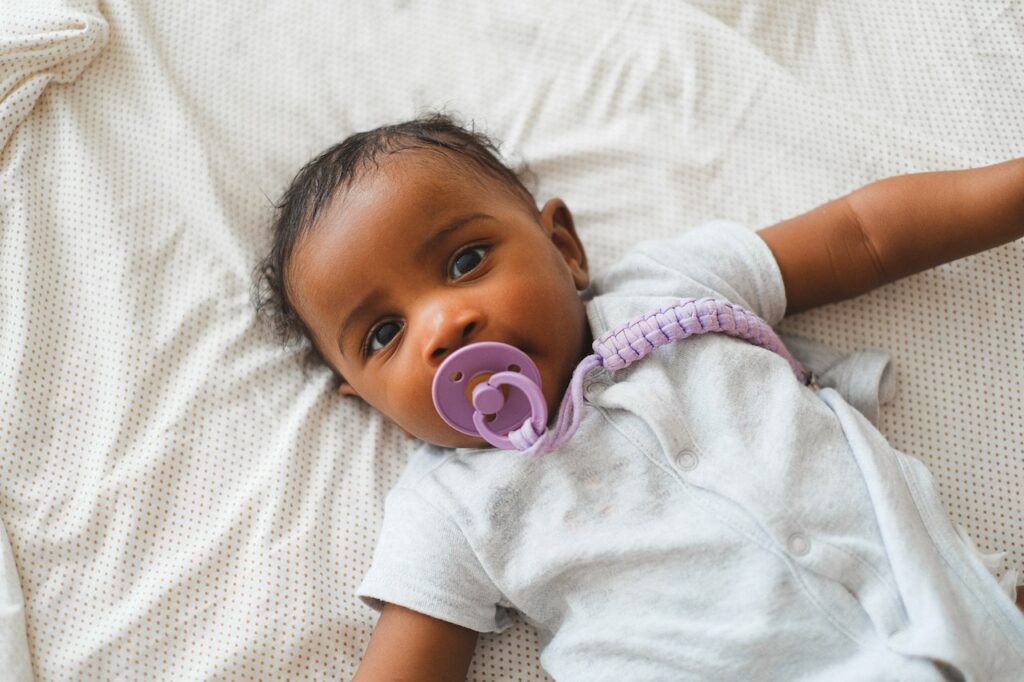
We know that the less time your baby is using the pacifier the best. However, there are tons of studies that suggest that pacifiers may help protect against SIDS. This is why we highly recommend using pacifiers during the first month until your baby can get to sleep by itself.
Nonetheless, if your baby won’t take a pacifier, don’t force it. And obviously it’s okay if the pacifier falls out during sleep, it is just something that can help your baby while trying to sleep.
- Very important to not hang the pacifier around your baby’s neck, not attach it to your baby’s clothing or stuffed animal. If it falls it falls, but avoid using strings in the crib.
Check out our favorite pacifier: Why is This the Best Pacifier for Breastfed Baby
For more information on pacifiers check this Pubmed article: Pacifier use in children: a review of recent literature
Take care of the temperature
Adults have a very complex system to regulate our body temperature but we usually need to adapt our clothing to the ambient. However, babies have a type of adipose tissue (fat) that allows a more accurate temperature regulation. This is why babies do not need heavy blankets or coats during winter.
Once you realize that they are almost always at the correct temperature, you will discover that they sleep better with just pajamas and that they do not need a heater or a cooler in their room. Obviously this does not exactly apply to outdoor temperatures, they can get very hot during summer under the sun and can get frostbite if it’s too cold outside; the important concept is to remember that even though we are freezing and need 3 blankets to sleep, this is not the case for our babies.
Our recommendation is to always touch their skin to see if it is too cold or too hot and work with this indication. But in general terms, it is safer to put them to sleep just with their pajamas.
Careful with blankets!
There are tons of little soft cozy blankets made for babies, but let me tell you, if you can, avoid using them!!
If you want to know more about why is it no safe to put your baby to sleep with a blanket, check out this post.
Baby sleep position
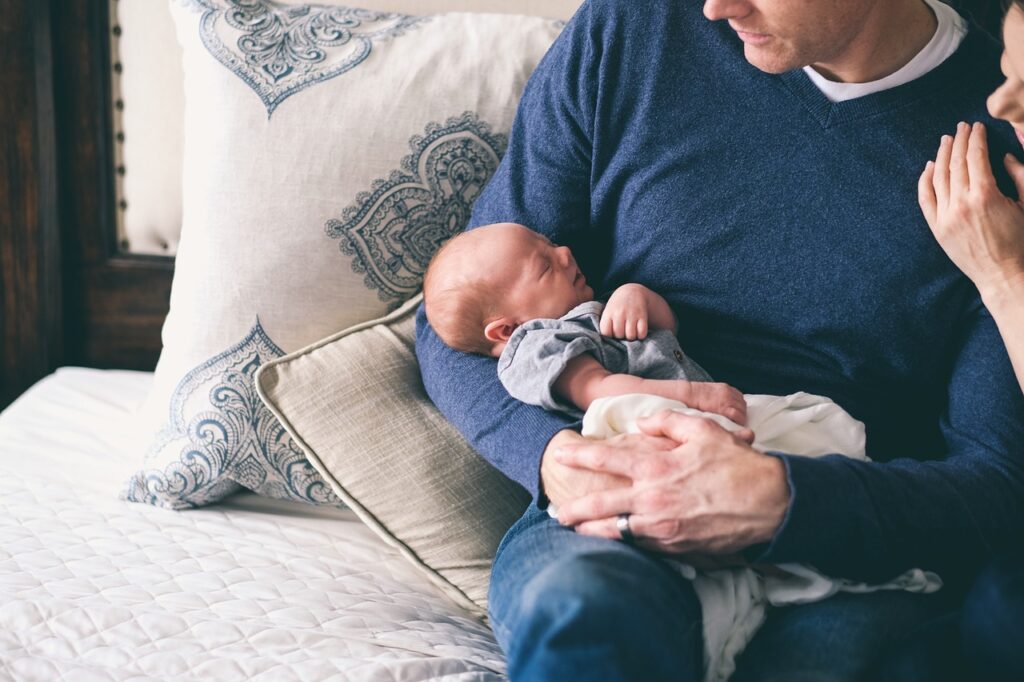
One thing that a lot of people wonder is in which position a baby should sleep. If there is not a specific recommendation from your pediatrician, your baby should be placed on their backs to sleep.
It has been demonstrated that, even though it is dangerous to sleep in our backs when we are feeling nauseous for the risk of vomit asphyxia, it has been demonstrated that in babies, the best position to reduce the risk of SIDS is on their backs.
Here one may ask, can we use anti-roll pillows? Well, it’s up to you but you must know that both the FDA (UE) and the EMA (Europe) warn that sleep positioners can cause babies to die because of suffocation.
How much sleep does a baby need?
This will always depend on the baby and on the routines that you as a family decide to take. However, there are some ranges that need to be taken into account to allow your baby to develop healthy and happy. Your baby may get cranky or overtired if they don’t get enough sleep.
Newborn sleep needs
As we all know, newborns spend more time asleep than awake. Tier total daily sleep varies but it can be from 8 hours up to 18 hours. At the end, babies wake up a lot during the night because they need to be feed so they actually are only sleeping 2-3 hours straight.
If you are one of those lucky families, maybe your baby doesn’t get up to eat; in those cases pediatricians usually recommend waking them up every 4 hours during the first 3 months to feed them. After that, you can let them sleep through the night and feed them more frequently during the day. At the end, you are going to figure out with your baby what works best for you.
To get deeper into your baby’s feeding schedule you may want to check our posts about breastfeeding.:
Sleeping requirements for a 3 to 6 months old baby
Your baby is no longer a newborn so they’ll need fewer night feeds and will be able to sleep for longer periods of time. Here it really depends on the baby but the average is 8 hours at night and some naps during the day.
One important thing to understand is that you shouldn’t be surprised if your baby can only stay awake for an hour or two. Sometimes we, as new parents expect to have a lot of time to spend with our newborn, but we need to understand that the first month, if everything goes well, most of the time we get to spend with our baby, is going to be while he or she is asleep.
Sleeping requirements for a 6 to 12 months old baby
At this point, night feeds may no longer be necessary. Here it depends on which type of feeding you are choosing, if it’s on demand maybe your baby will wake up at some point of the night but if until now you are waking up your baby to feed them, you can stop doing it, they are getting enough nutrients during the day.
Sleeping requirements for a 12 months to 2 years old baby
Here it depends on the kid and especially on the day schedule that they are having. However, the recommendations are around 12 to 15 hours of sleep which can be convinced between a long night sleep plus a nap.
Sleeping requirements for a 2 to 3 years infant
Girls and boys are quite different at this stage so depending on the case your kid may want to sleep more or less, however it is recommended to get at least 10 hours of sleep and up to 12.
Sleeping requirements for a 4 years old and above
At this point babies very much regulate their sleep needs so you don’t have to worry anymore about the amount of sleep that your baby is getting. They rarely will over or undersleep. THe average is 11 hours but some kids need a nap or two during the day to rest.
Baby sleep routine
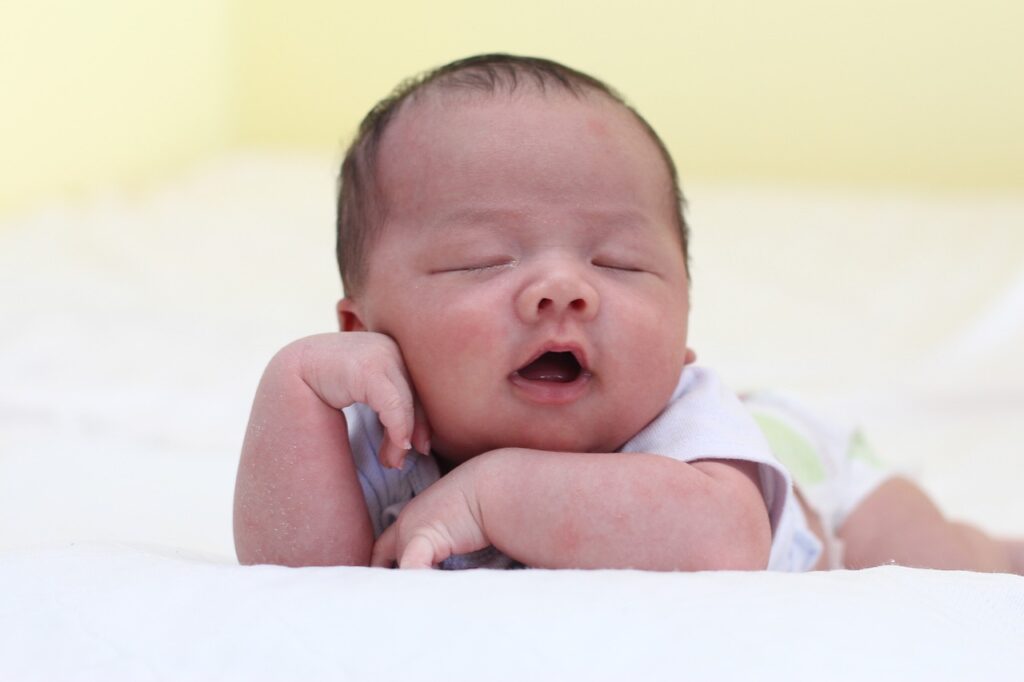
At the beginning it may be quite awful if your baby cannot sleep for long periods of time. Luckily, over time, their body gets into a sleep pattern and life gets easier. They start sleeping for longer stretches, even during the night.
Where should a baby sleep?
Getting your baby to sleep it’s not easy. The first thing to consider is where your baby is going to sleep. According to pediatricians, the best place for a baby to sleep is near their parents, this can be in its own crib or in a safely attached co-sleeper. It is not recommended to set up a room for them until they are at least 6 months old and, if possible, better at 12 months.
How to create a bed routine to put your baby to sleep?
One of the most important, but at the same time difficult, things to do as parents, is to set up routines. At the end as couples we end up being kind of messy but when we become parents we have a responsibility to keep up with what our baby needs.
Creating a bed routine can help the baby to anticipate sleep, making you aware of when they need to go or take a nap and, most importantly, they will eventually begin to be awake during the day and sleep through the night.
A good bedtime routine may include anything that’s shooting for your baby such as a warm bath 30 minutes before putting them on the crib, a relaxing massage with a good baby cream, some lullabies or books and dimming the lights.
On the other hand it is also important to know what you should avoid. It is important that your baby is as relaxed as possible so anything that can excite them is a no. Playing or extreme laughing are better during the morning as well as bright lights and loud noises.
This is something very important during the first month, after that your baby will have a biological schedule that will put it to sleep almost by itself.
How to deal with baby sleep pattern changes?
All babies change their sleep routine and this can happen anytime, however it is common that at 2-3 years you encounter a regression where your baby acts like a newborn again.
Be prepared to change your routine and to try new techniques as your baby grows and enters different stages of development and maturity. And always remember that growth spurts, teething and illnesses can all affect how you baby sleep; so always check that everything is okay before getting frustrated.